Marketing Automation 2026: How to Build a Self-Sustaining 360° Marketing System
There’s a moment in technology when convenience becomes infrastructure—when a “nice-to-have” transforms into a “can’t-compete-without.”
For marketing automation, that moment is 2026.
Here’s what changed: AI search engines like Google’s Search Generative Experience don’t just show links anymore. When someone in Houston searches “best marketing consultant near me,” AI scans your website, social profiles, reviews, videos, blog posts, and podcasts—then synthesizes everything into one comprehensive answer.
If you’re not consistently present across multiple channels, you’re invisible.
And the numbers prove it: businesses using three or more marketing channels achieve purchase rates 287% higher than those using single-channel approaches. That’s not a typo—nearly three times more sales just from being present everywhere.
This isn’t about working harder. It’s about building a self-sustaining 360° marketing system that runs while you sleep.
- The AI Search Revolution: Why Everything Changed
- Why 360° Marketing Became Survival, Not Strategy
- The Complete 360° Marketing Automation System
- The Self-Sustaining Loop
- The 90-Day Implementation Roadmap
- Real Business Results
- Your Marketing Automation Tool Stack
- Common Mistakes That Kill Automation
- The 2026 Competitive Reality
- Frequently Asked Questions (FAQs)
The AI Search Revolution: Why Everything Changed
Remember when SEO meant ranking #1 on Google? That playbook died in 2025.
According to BrightEdge’s 2025 survey, 35% of marketers report that Google’s AI search features have already reduced their organic traffic. Some publishers expect decreases of 20-60% as AI-powered snapshots answer queries without users ever clicking through.
But here’s what most businesses miss: AI search isn’t killing visibility—it’s redistributing it.
How AI Actually Decides Who Wins
When Google’s AI generates an answer, it doesn’t just scan your website. Modern search engines analyze:
- Your social media profiles and activity
- Your video content (YouTube, TikTok)
- Your podcast transcripts
- Your reviews and testimonials
- Your LinkedIn articles
- Your business directory listings
- Every digital footprint you’ve left
Real example: A dentist in Sugar Land, Texas started posting educational content across YouTube, LinkedIn, Instagram, and his blog. Within three months, when people searched “best dentist for root canal near Houston,” Google’s AI Overview featured him prominently—pulling from his YouTube video, Google reviews, and blog post simultaneously.
He didn’t just rank. He dominated the entire AI-generated answer.
Why 360° Marketing Became Survival, Not Strategy
Let’s talk numbers—because numbers don’t have opinions.
The Omnichannel Reality (2025-2026 Research):
- 287% higher purchase rate: Marketing campaigns using three or more channels achieve 287% higher purchase rates versus single-channel campaigns.
- 89% customer retention: Companies with strong omnichannel strategies retain 89% of customers, while weak strategies only retain 33%.
- 30% more lifetime value: Omnichannel customers spend 30% more over their lifetime.
- 80% use multiple channels: 80% of consumers use multiple channels to complete a single purchase.
- 80% AI-driven by 2026: Gartner predicts 80% of marketing interactions will be AI-driven by end of 2026.
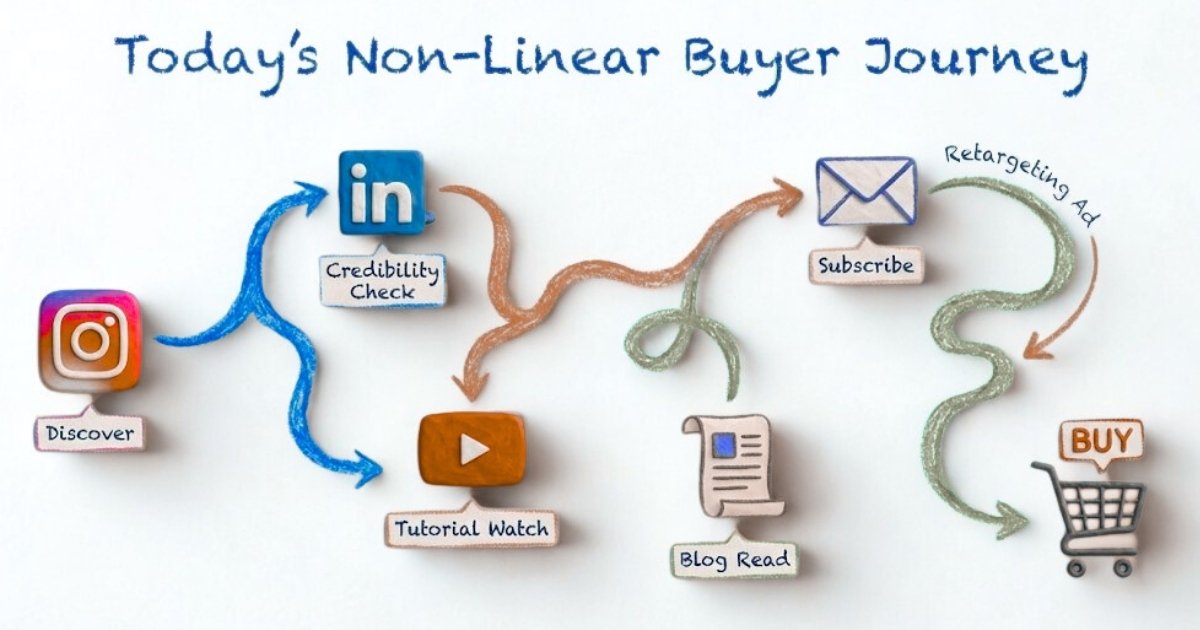
The Modern Customer Journey (Non-Linear Reality)
Today’s buyers don’t follow straight paths. They:
- Discover you on Instagram
- Check your LinkedIn for credibility
- Watch your YouTube tutorial
- Read your blog post
- Subscribe to your email
- Finally buy after a retargeting ad
Miss even one touchpoint, and you’ve lost them to a competitor who’s present everywhere.
The Social Commerce Explosion
The global social commerce market hits $2.9 trillion in 2026. People aren’t just discovering products on social—they’re buying without leaving the platform.
59% of social commerce shoppers prefer small businesses, and 44% will buy from unfamiliar brands while shopping on social media.
Translation: If you have great Instagram but no YouTube, TikTok, or LinkedIn, you’re leaving millions on the table.
The Complete 360° Marketing Automation System
A true 360° system isn’t about tools—it’s about architecture. Four layers working together:
Layer 1: AI-Powered Content Creation
Tools: ChatGPT, Claude, Notion AI
Investment: 3-4 hours/week
Output: 30-40 pieces of content
One core idea becomes:
- 1 blog post (2,500 words)
- 1 LinkedIn article (1,500 words)
- 10-15 social media posts
- 1 YouTube video script
- 1 podcast episode outline
- 5-7 email sections
Layer 2: Multi-Platform Scheduling
Tools: Metricool, Buffer, Later
Time Saved: What took 6 hours now takes 15 minutes
Schedule across Instagram, TikTok, YouTube, LinkedIn, Facebook, Twitter/X, Pinterest—all from one dashboard. AI suggests optimal posting times. Content queues for months.
Layer 3: Email Marketing Automation
Tools: Klaviyo, HubSpot, ConvertKit
Result: Leads nurtured automatically 24/7
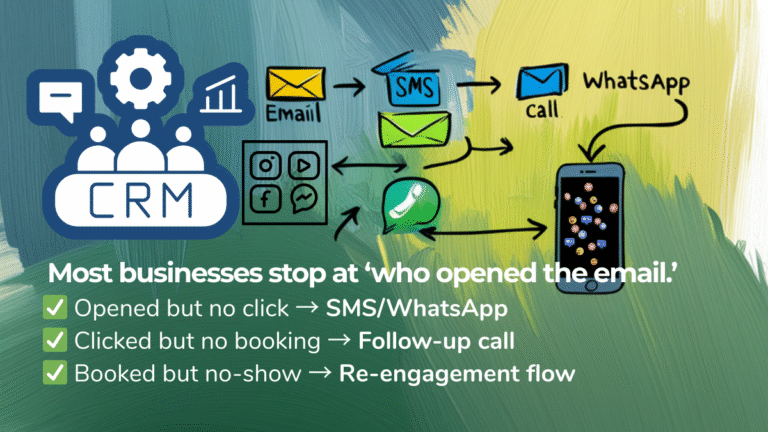
Example sequence:
- Day 0: Download lead magnet → Instant delivery
- Day 2: Case study email
- Day 5: Common mistake email
- Day 8: Results story
- Day 12: Offer email
All triggered automatically. No manual sending.
Layer 4: SEO & Blog Automation
Tools: Surfer SEO, Rank Math, SEMrush
Compound Effect: Each blog works for months/years
AI generates SEO-optimized outlines, suggests keywords, analyzes competitors, adds schema markup automatically.
The Self-Sustaining Loop
- SEO blog attracts traffic
- Visitors subscribe automatically
- Email sequence nurtures them
- They see your social content (pre-scheduled)
- Social drives back to new blogs
- Cycle repeats infinitely

This runs 24/7, even while you sleep.
The 90-Day Implementation Roadmap
Days 1-14: Foundation
Week 1: Track your time for 5 days. Categorize every task as Creative, Strategic, or Repetitive. Most businesses waste 15-25 hours/week on repetitive work.
Week 2: Score each task: Time saved + Consistency impact – Difficulty. Your top 3 Quick Wins are usually:
- Social media scheduling
- Welcome email sequence
- Blog-to-social automation
Days 15-35: Setup
Week 3: Choose ONE social scheduler (Metricool recommended) + ONE email platform (HubSpot Free or ConvertKit). Test basic automations.
Week 4-5: Use AI to generate 50+ content ideas. Create 20-30 pieces. Schedule 4 weeks out.
Days 36-60: Automation
Week 6-7: Build 5-email welcome sequence. Test it completely.
Week 8-9: Add advanced automations:
- New blog → auto-post to all socials
- Lead magnet download → add to CRM + trigger sequence
- High-value page visit → tag as “hot lead”
Days 61-90: Optimization
Analyze what’s working. Double down on high-performing content. Add behavioral segmentation, dynamic personalization, A/B testing.
Day 90 Checkpoint:
✅ 15-20 hours/week saved
✅ 8-12 weeks content scheduled
✅ 15-20 automations running
✅ Consistent posting without manual work

The 90-Day Rule: If automation hasn’t saved time OR made money in 90 days, kill it.
Real Business Results
Case Study 1: Houston Dental Practice
Before:
- 25 hours/week on marketing
- 2-3 social posts/week
- 8-12 new patients/month
After 6 months:
- 6 hours/week (80% reduction)
- 7 posts/week across 5 platforms
- 24-28 new patients/month (2.5x increase)
ROI: $48,000 additional revenue vs. $180/month tool costs
Key win: Now appears in Google AI Overviews for “best dentist for root canal Houston”
Case Study 2: Texas E-Commerce Brand
Before:
- 72% cart abandonment
- 18% email open rate
- $67 customer lifetime value
After 6 months:
- 58% cart abandonment
- 34% email open rate
- $124 customer lifetime value
ROI: $127,000 additional revenue vs. $2,160 annual tool costs (5,886% ROI)
Key win: Abandoned cart automation alone recovered $42,000 in lost sales
Case Study 3: Austin Business Coach
Before:
- $4,200/month income
- 60+ hour weeks
- Burnout imminent
After 6 months:
- $14,800/month ($8,400 from automated course)
- 35-hour weeks
- Sustainable lifestyle
ROI: 17,500% return on automation investment
Your Marketing Automation Tool Stack
STARTER: $0-50/month
Perfect for testing without risk:
- Content: Notion (free) + ChatGPT (free or $20/month)
- Social: Canva/Adobe Express (free tier)
- Email: HubSpot Free or ConvertKit Free
- Automation: n8n/Make.com/Zapier (free or $20/rmonth)
- SEO: Rank Math (free)
What you achieve: 5-7 posts/week across 3-4 platforms, basic email sequences
GROWTH: $100-200/month
For serious automation:
- Content: Notion AI ($10) + ChatGPT Plus ($20)
- Social: Metricool Pro ($18) + Buffer
- Email: Klaviyo ($30-60) or ConvertKit ($29)
- Automation: Make ($9-29) or n8n ($20)
- SEO: Surfer SEO ($89)
What you achieve: 10-15 posts/week across 8-10 platforms, sophisticated sequences, SEO optimization
SCALE: $300-500/month
For agencies or high volume:
- All-in-one: HubSpot Marketing Hub ($45-800)
- OR custom stack with advanced features
Common Mistakes That Kill Automation
Mistake #1: Automating Garbage
Bad content posted consistently is worse than no content.
Mistake #2: Over-Automating Too Fast
ONE automation per week maximum. System becomes unmanageable otherwise.
Mistake #3: “Set It and Forget It”
Review weekly (10 min), audit monthly (2 hours), overhaul quarterly (6 hours).
Mistake #4: Losing Your Voice
Always review AI content. Add personal touches. If it doesn’t sound like you, rewrite it.
Mistake #5: Not Measuring ROI
Track: Time saved, engagement rates, conversion rates, revenue attributed.
The 2026 Competitive Reality
- Only 32% of small businesses use marketing automation
- Only 15% use it effectively
- By mid-2026, adoption hits 60%+
- By 2027, it’s table stakes
- By 2028, manual marketing looks unprofessional
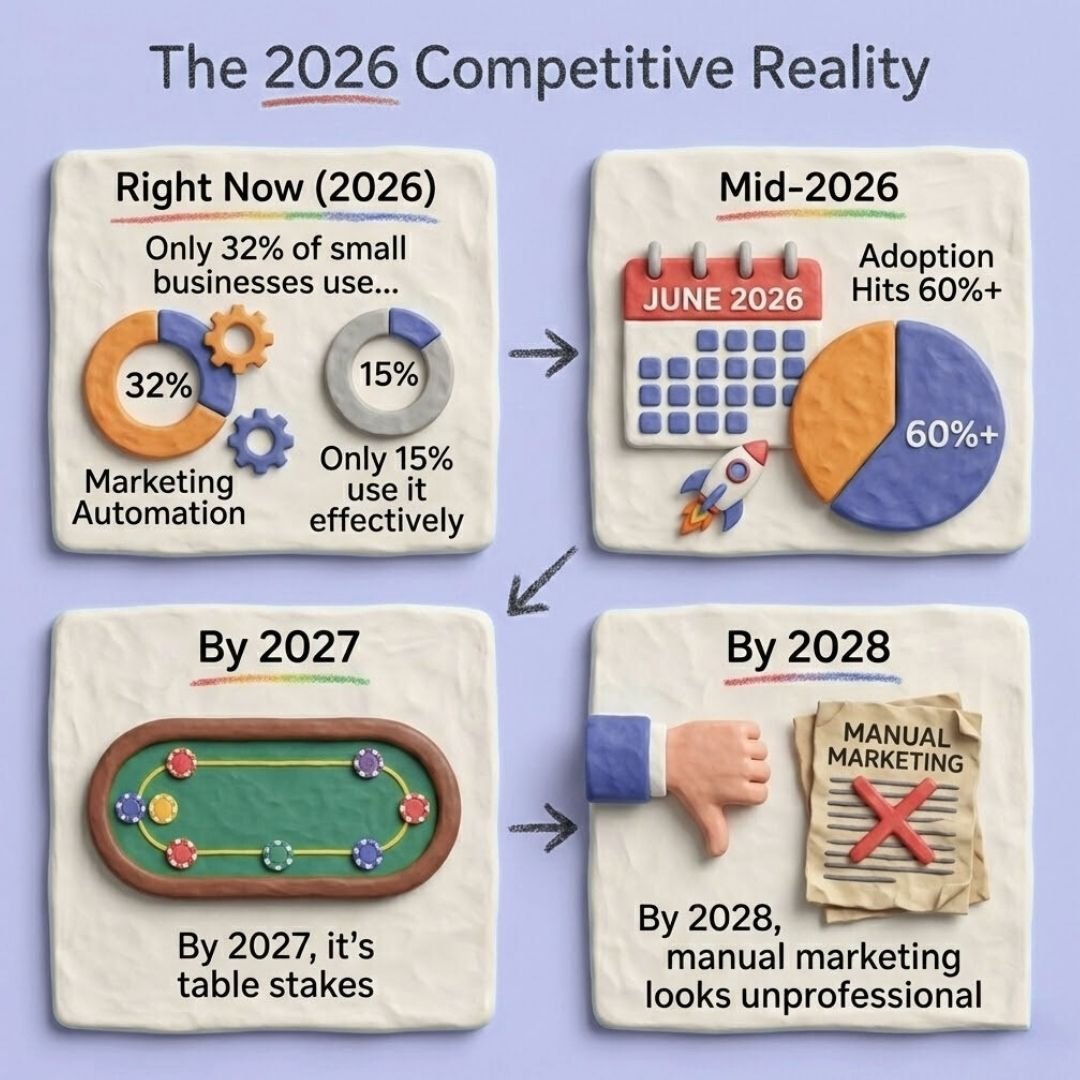
The window is closing fast.
Frequently Asked Questions (FAQs)
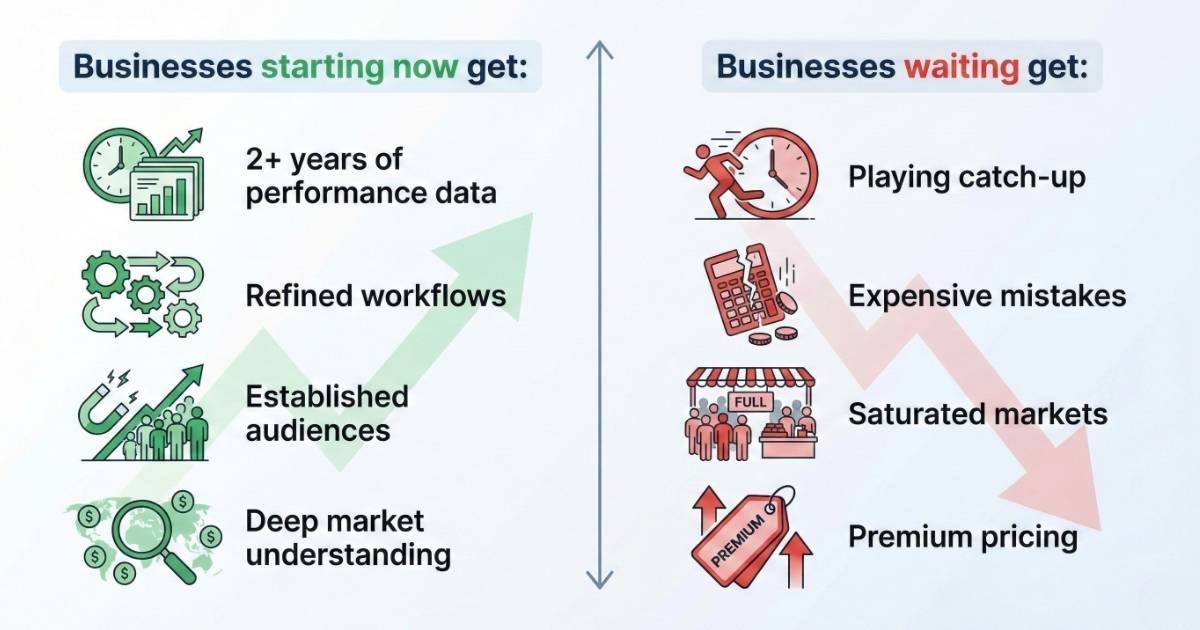
Ready to Start?
After 20 years in digital marketing and implementing hundreds of automation systems, I’ve seen what works—and what wastes time and money.